
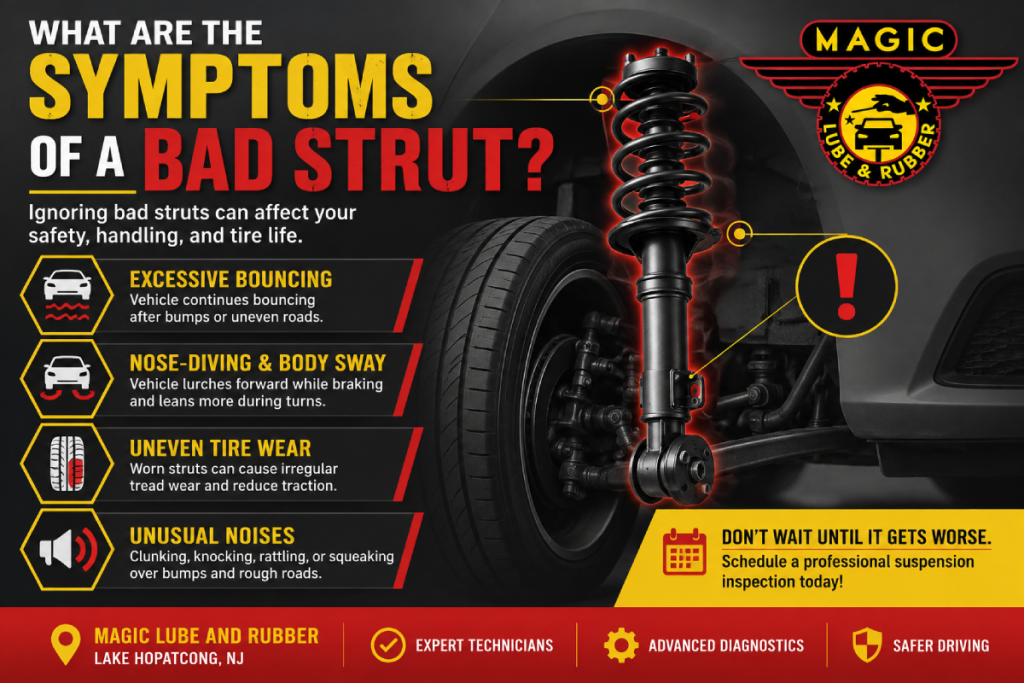
Has your vehicle started bouncing excessively, leaning through turns, or making clunking noises over bumps?
In this article, we’ll explain the most common warning signs and why addressing them early helps keep your vehicle safe and comfortable on the road.
Excessive Bouncing
One of the most noticeable symptoms of a bad strut is excessive bouncing after driving over bumps or uneven pavement.
Struts are designed to absorb road impacts and keep your tires firmly planted on the road. When a strut wears out, it loses its ability to control the suspension, causing the vehicle to continue bouncing long after hitting a bump.
Many drivers first notice this while driving over railroad tracks, speed bumps, or rough roads. Instead of settling quickly, the vehicle may continue to move up and down several times.
Nose-Diving and Body Sway
Does your vehicle lurch forward every time you press the brake pedal?
This forward dip, known as nose-diving, commonly occurs when a bad strut can no longer support the vehicle’s weight during braking.
You may also notice increased body sway while turning or changing lanes. Instead of feeling stable, the vehicle leans more than usual, making it harder to maintain control.
These handling changes affect more than comfort. They can increase stopping distances and reduce driver confidence during emergency maneuvers.
Uneven Tire Wear
When struts begin wearing out, they allow excessive tire movement. Instead of maintaining consistent contact with the road, the tire may bounce or shift slightly, creating irregular tread wear.
Common wear patterns include:
- Cupping or scalloped tread
- Uneven wear across one side of the tire
- Premature tire replacement
- Reduced traction in wet weather
Replacing tires without correcting the underlying suspension issue often means the new tires will wear out prematurely as well.
Unusual Noises
If you begin hearing clunking, knocking, rattling, or squeaking noises while driving over bumps, worn struts may be part of the problem.
These sounds often occur because internal strut components have worn out or because surrounding suspension parts are experiencing additional stress.
Drivers frequently notice the noises:
- Driving over potholes
- Entering driveways
- Crossing speed bumps
- Turning into parking lots
Not every suspension noise comes from the struts alone. Ball joints, sway bar links, bushings, and control arms can create similar sounds.
A complete suspension inspection performed by certified technicians is the best way to identify the exact cause.
Keep Your Suspension Performing at Its Best with Magic Lube and Rubber
Magic Lube and Rubber, a top-rated car maintenance facility specializing in professional automotive repair services for domestic, European, and Asian vehicles, we help car owners identify suspension problems before they become major safety concerns.
Serving Northern New Jersey since 2022, our highly trained and certified technicians use advanced diagnostic equipment to inspect your suspension, steering, tires, and braking system accurately.
Don’t wait until a worn-out suspension affects your vehicle’s handling or damages your tires.
If you’ve noticed any symptoms of a bad strut, visit Magic Lube and Rubber in Lake Hopatcong, NJ, for a professional inspection and dependable automotive maintenance service.
Contact us at 973-858-5840 or reach our Facebook page.
Frequently Asked Questions
What are the most common symptoms of a bad strut?
Common symptoms of a bad strut include excessive bouncing, nose-diving while braking, body sway during turns, uneven tire wear, and clunking or knocking noises over bumps.
Is it safe to drive with a bad strut?
Driving with a worn strut can reduce vehicle stability, tire contact, and braking performance. A professional suspension inspection is recommended when symptoms appear.
Can bad struts cause uneven tire wear?
Yes. Worn struts can allow excessive tire movement, potentially causing cupping, scalloping, uneven tread wear, and premature tire replacement.
What noise does a bad strut make?
A bad strut may produce clunking, knocking, rattling, or squeaking sounds, especially when driving over potholes, speed bumps, or uneven pavement.
Can bad struts affect braking?
Yes. Worn struts can contribute to excessive nose-diving during braking and may reduce vehicle stability and control when stopping.
How can I tell if a suspension noise is coming from a strut?
Several suspension components can make similar noises, including ball joints, bushings, sway bar links, and control arms. A complete suspension inspection can identify the source.